
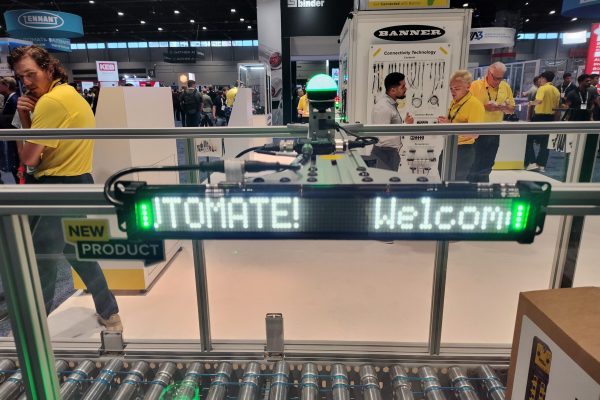
Every year at Automate, a handful of technologies get most of the attention. This year it was humanoid robots and AI, everywhere you looked. Our engineers walked the floor for all of it, but most of what they came home talking about was quieter than that: real, practical improvements that can show up on a project now, not someday. Here’s what stood out, and what it could mean for the kind of equipment we build.
Key takeaways
- Power supplies and circuit protection are getting smarter, which could mean smaller, cheaper equipment specs without losing safety margin.
- AI is showing up inside PLC programming tools themselves, not just as a chatbot on the side.
- Vision, cabling, and networking hardware are all trending toward more flexible, standardized designs.
- Humanoid robots and robotic hands remain impressive but aren’t yet practical for most single-task manufacturing jobs.
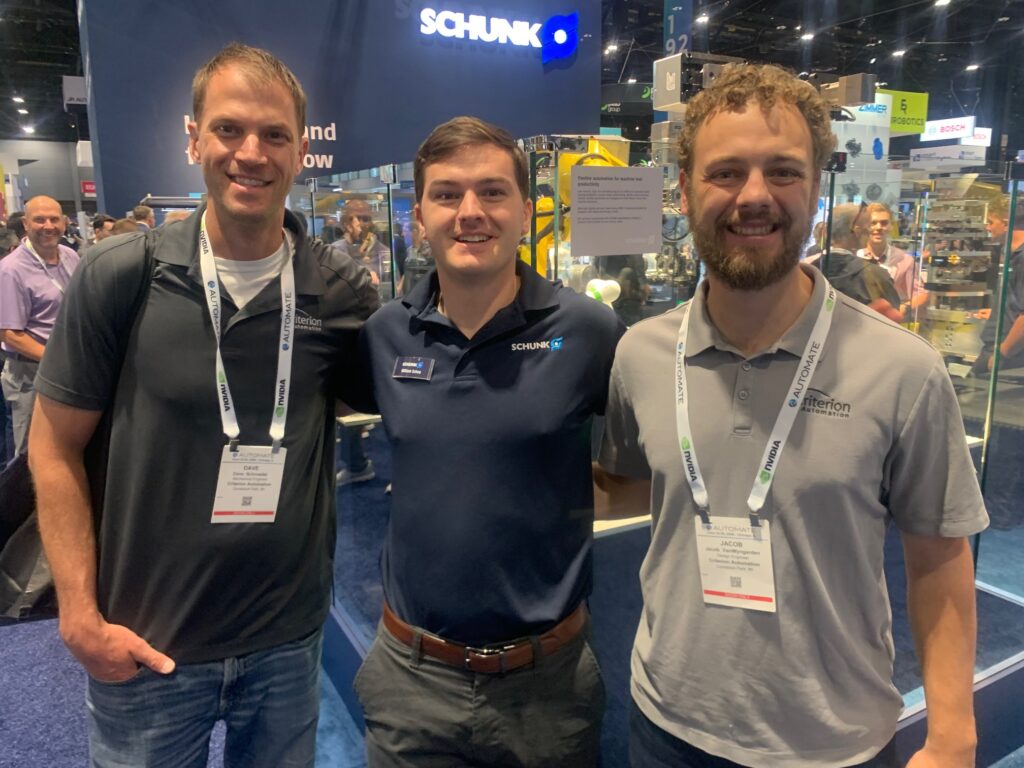
Power That Adapts to the Job
Smarter power supplies and resettable circuit protection could let you spec smaller, less expensive equipment without giving up the safety margin. Power supply manufacturers like PULS are building in guarantees for handling short bursts of extra demand, the kind of temporary overlap that used to mean buying a bigger, more expensive unit just to be safe. We also saw PLC-controlled circuit protection that resets from an HMI screen. The technology itself isn’t new, but the price point is finally dropping to where it’s competitive with traditional manual-reset breakers. It’s not a hands-off, automatic reset: an operator or maintenance tech still has to reset it. The difference is they can now do that safely from an HMI screen instead of suiting up in arc-flash gear to open an energized panel.
AI Is Becoming a Quiet Helper, Not a Headline
The most useful AI we saw at the show works inside the tools engineers already use, not as a bolt-on chatbot. Copying a problem into a separate AI tool and pasting the answer back by hand is already a step behind how AI-assisted software development works today. What’s new is bringing that same kind of tool-using AI assistant, the kind software developers already work alongside daily, directly into PLC programming. Beckhoff‘s TwinCat Co-agent tool does exactly that for structured text: the AI operates inside the actual development environment, building and testing code itself rather than just suggesting it, with the usual safeguards like version history still in place. The effect is less about doing something new and more about doing the familiar work faster and with fewer mistakes.
Flexibility Kept Showing Up Everywhere
Across the show, suppliers are redesigning hardware and software to be reconfigured or expanded later instead of custom-built each time. One motor and controller supplier now offers an off-the-shelf way to connect two different industrial networking standards together, something we’ve previously had to build custom, project by project. A cable management supplier redesigned its entire product line around a single bracket style, cutting down the variety we’d otherwise have to stock and manage. Small on their own, but this kind of change adds up to systems that are cheaper to maintain and easier to adapt when a customer’s product or process changes.
Vision and Displays: Read the Fine Print
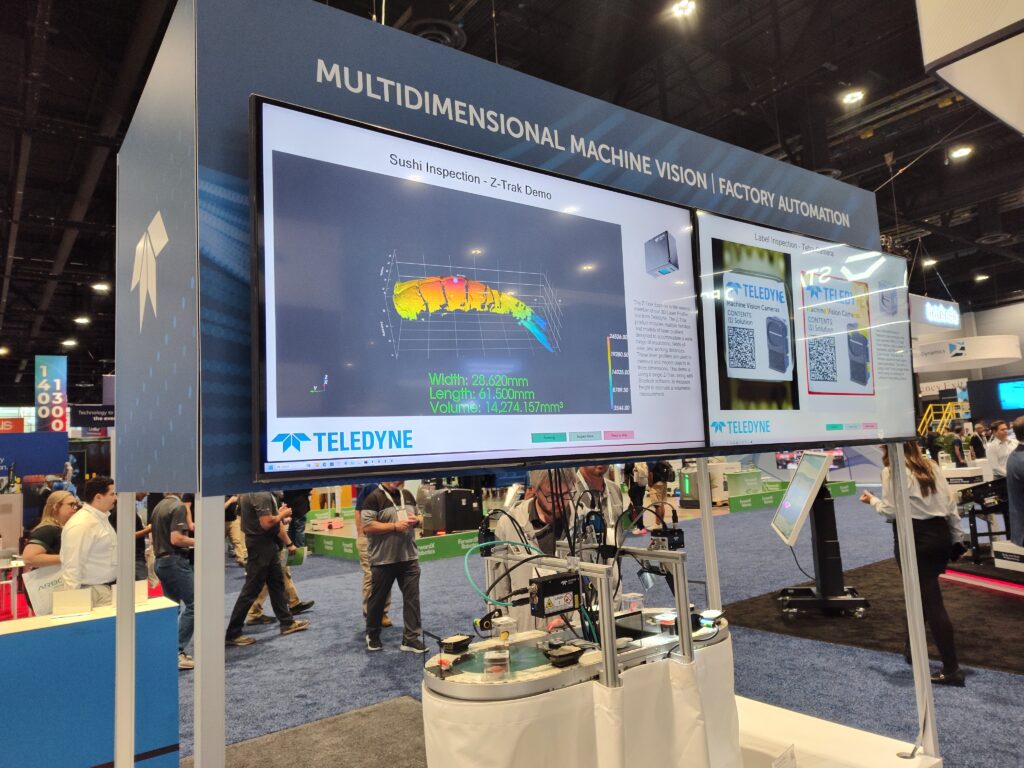
Even within the same product line, different sizes can perform very differently, so the exact part number matters more than the family name. The spec sheet shows it, if you read closely: in one line we compared, the 15″ and 19″ panels were mediocre performers, while the 18″ and 23″ panels in the same family were excellent, with real differences in brightness and viewing angle listed right on paper. It’s a good reminder to check the actual spec for the exact part number you’re speccing, not just the product family name, and one reason we test before we commit to a display. On the imaging side, we also saw camera systems handling more types of inspection at once with less added hardware, and specialty imaging that can see through materials that are normally opaque to the naked eye, which opens up some interesting quality-inspection possibilities down the road.
Safety Standards Are Catching Up
New safety communication standards and wireless remotes are close to making safety systems simpler to wire, monitor, and upgrade. A newer safety communication standard is close to final regulatory approval from multiple manufacturers. We also looked at safety-rated wireless remotes as a possible upgrade from the ones we use today, not quite there yet on every feature we’d want, but close, and suppliers say they’re hearing the same request from other customers.
Small, Practical Upgrades
Not every improvement is complicated. Some of the most useful upgrades are simple tools that save time and money. An aluminum extrusion supplier now offers a web-based tool that makes it easy to design your own frames and fixtures, or have them do it for you, useful for keeping project timelines and costs down. And a gripper manufacturer showed flexible fingers that can pick up oddly shaped or delicate parts that standard vacuum cups can’t handle, which opens up options for automating tasks that used to require a person.
Humanoid Robots and AI: Impressive, Not There Yet
Humanoid robots and robotic hands are genuinely improving, but for most single, well-defined tasks, purpose-built equipment still wins. We’d be leaving something out if we didn’t talk about the robots. AI and humanoid robots were the visual centerpiece of the show, and some of it was genuinely exciting, including software that can turn a plain-English description into a working program for a robot already installed on a factory floor, no specialized programming required. That points toward automation that’s easier to repurpose when a product or process changes, without buying all new equipment.
That said, the robotic hands and humanoid platforms themselves are still early. Prices run anywhere from $15,000 to $150,000 per hand, and outside of carefully staged demonstrations, it’s not yet clear what job on a typical factory floor they’d do better than equipment built specifically for that job. Our honest take: for one well-defined task, purpose-built equipment usually wins. Humanoid robots and dexterous hands earn their keep when the task itself keeps changing, and we’re not there yet for most manufacturers. We’re watching this space closely, but we won’t recommend a technology we haven’t tested ourselves, no matter how good the demo looks.
We didn’t come home from Automate convinced any single technology is about to change manufacturing overnight. What we did come home with is a clearer sense of where things are headed, and that’s exactly why we go every year. If you were at the show too, we’d enjoy comparing notes. And if any of this connects to a challenge you’re facing, we’d be glad to talk it through.
If any of this connects to a project on your floor, get in touch. We’re glad to talk through what would (and wouldn’t) make sense for your equipment.
Frequently Asked Questions
What did Criterion Automation see at Automate 2026?
Smarter, more adaptable power supplies and circuit protection; AI tools built directly into PLC programming environments; more standardized, flexible motion and cabling hardware; and humanoid robots that are improving but still not practical for most single-task manufacturing jobs.
How much do humanoid robotic hands cost right now?
Prices we saw ranged from about $15,000 to $150,000 per hand, reflecting how early-stage the technology still is.
Is AI actually being used in PLC programming yet?
Yes. Tools like Beckhoff’s Co-agent bring AI coding assistance directly into structured text programming environments, building and testing code inside the actual development tool rather than suggesting it from the side.
Should manufacturers invest in humanoid robots now?
For most single, well-defined tasks, purpose-built equipment still outperforms humanoid robots and dexterous hands today. Humanoid robots make more sense when the task itself keeps changing.